Why CodeSeller Discarded Restrictive Single-Domain Licenses for 100% Extended Commercial Rights
How traditional digital asset marketplaces restrict buyer growth through domain limitations, and why unconstrained commercial licenses provide superior software longevity.

The Traditional Marketplace Licensing Problem: Artificial Domain Constraints
For over a decade, digital software marketplaces operated on an outdated intellectual property paradigm borrowed from stock photography: the Single-Domain Regular License.
Under standard licenses imposed by platforms such as Envato (CodeCanyon) and Codester, software purchasers are legally permitted to deploy the acquired script or template on exactly one single domain for one single end product. If an agency builds a mobile application for a client, they are legally obligated to purchase a new license for each subsequent client. More critically, if the buyer intends to charge end-users (for example, operating a multi-tenant SaaS application or requiring a paid subscription), standard licenses explicitly forbid it, compelling the buyer to purchase an Extended License that frequently costs between 5x and 10x the standard price ($300 to $1,000+ per item).
At CodeSeller.in, we eliminated this arbitrary restriction. Every software asset listed on CodeSeller includes an unrestricted Extended Commercial License by default, giving developers and agencies full operational freedom without hidden licensing surcharges.
1. What Does an Extended Commercial License Include on CodeSeller?
When you acquire source code on CodeSeller, the license is engineered specifically for software engineers, digital agencies, and entrepreneurial founders:
- Unlimited Personal and Client Deployments: You may deploy the code across an unlimited number of domains, subdomains, and customer client installations without purchasing additional licenses.
- Full SaaS Monetization Rights: You are legally entitled to charge end-users, integrate payment gateways, monetize subscription tiers, and generate recurring revenue from the software.
- Unrestricted Customization & White-Labeling: You receive complete access to the source code, allowing you to rebrand, customize workflows, add proprietary features, and integrate your own design systems.
- Agency Deliverable Ownership: Agencies can build production websites and custom software solutions for paying clients, transferring the operational deliverable to the client without licensing penalties.
2. Comparing Traditional Marketplace Licenses with CodeSeller
| Licensing Term | Traditional Marketplaces (CodeCanyon / Codester) | CodeSeller.in Extended Commercial License |
|---|---|---|
| Domain Allowance | Strictly 1 domain per purchase | Unlimited domains & installations |
| Charging End Users (SaaS) | Prohibited on Standard License; requires costly Extended License ($500+) | Included by default at standard price |
| Client Deliverables | Requires separate license for each client | Included under single agency license |
| Source Code Access | Full source code (often partially obfuscated or encrypted) | 100% human-readable, unencrypted code |
| Reselling Raw Source | Prohibited | Prohibited (protects original authors) |
3. The One Fair Rule: Protecting Creator Intellectual Property
While CodeSeller provides buyers comprehensive commercial freedom to monetize their applications and build client systems, there is one non-negotiable rule designed to protect software authors:
You cannot re-sell, distribute, or publicly open-source the raw, uncompiled template or script as a standalone digital asset.
In other words, you can use the code to build 100 client applications or launch a $10,000/month SaaS company, but you cannot package the raw repository and resell it on a competing marketplace or digital download store. This balanced approach protects authors from asset piracy while empowering developers to build without constraints.
Conclusion: Freedom for Builders
Software licensing should empower developers, not trap them in legal loopholes. By packaging full Extended Commercial rights into every purchase, CodeSeller allows indie hackers and agencies to focus on what matters most: building robust, profitable digital products.
Related Marketplace Analysis & Guides

How to Create Your Own UPI Payment Gateway in 2026: Complete PHP, Node.js & Android Architecture
Master the engineering behind self-hosted UPI payment gateways in 2026. Learn how to generate NPCI dynamic QR codes, capture bank UTRs via automated Android notification listeners, prevent replay attacks, and integrate zero-commission checkouts in PHP 8 and Node.js.
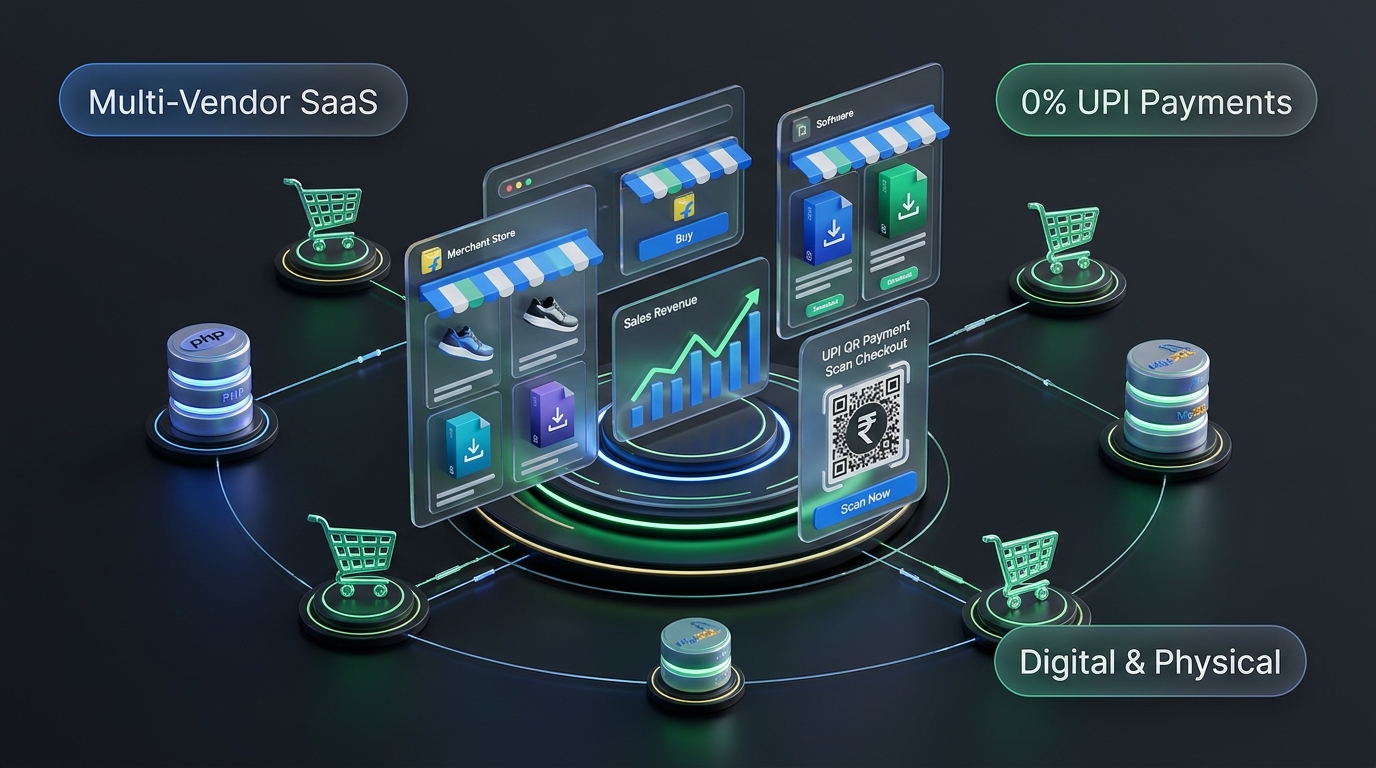
How to Launch a Multi-Vendor E-Commerce Platform & Storefront SaaS in 2026: The Complete PHP & MySQL Blueprint
Learn how to launch your own multi-vendor e-commerce marketplace and Shopify-style digital storefront builder in 2026 using pure PHP 8 and MySQL. Explore multi-tier SaaS billing, instant UPI checkout, digital download tokens, and turnkey commercial source code.

How to Build a Multi-Device WhatsApp REST API Gateway SaaS in 2026: The Complete WAPI Engine Architecture
Learn how to launch your own multi-device WhatsApp REST API gateway and auto-responder SaaS in 2026. Discover how to bypass expensive Meta Cloud API fees, implement automated webhooks, and deploy turnkey commercial WhatsApp SaaS source code.
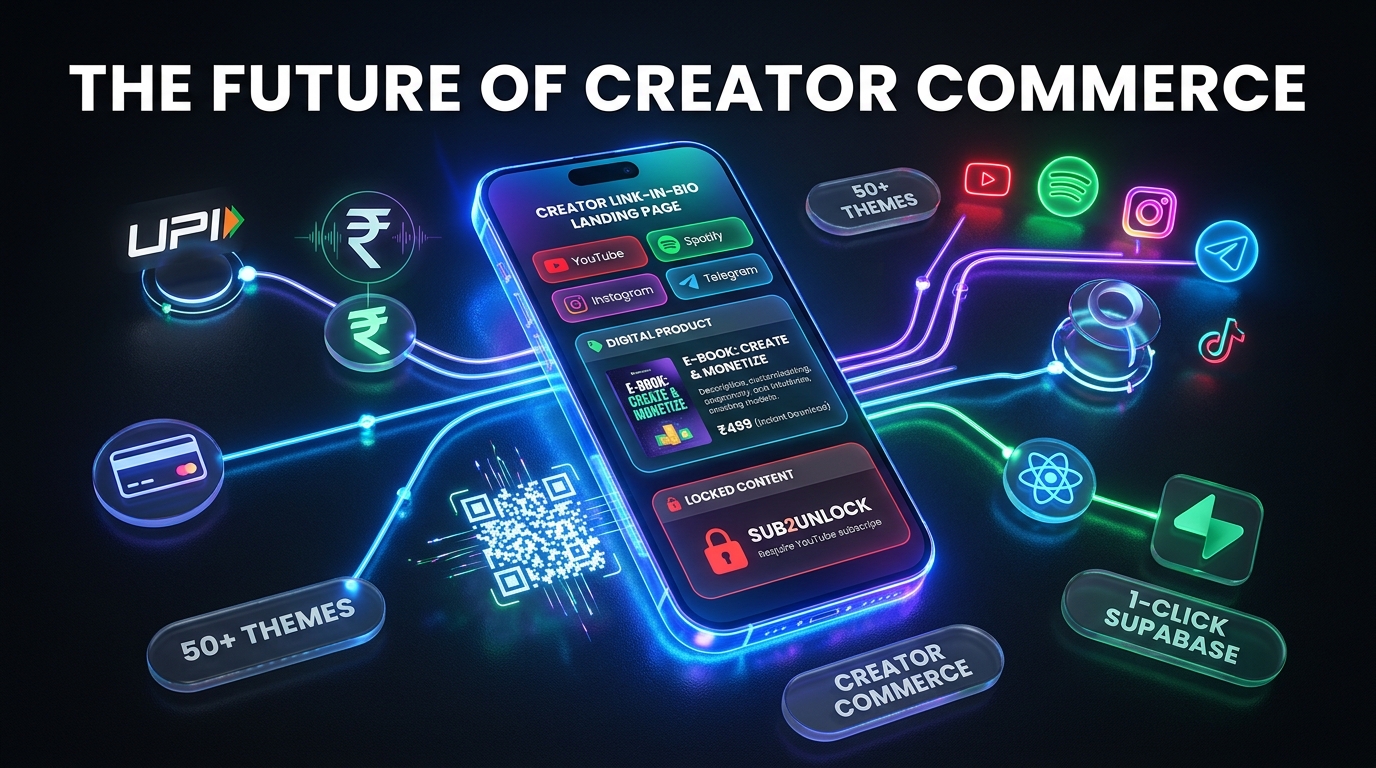
How to Launch a Link-in-Bio & Creator Store SaaS in 2026: The Linktree Clone Architecture (React 19 & Supabase)
Learn how to launch a profitable Link-in-Bio & Creator Store SaaS in 2026 using React 19, Vite, and Supabase. Discover how to monetize digital downloads, Sub2Unlock paywalls, 50+ themes, and turnkey commercial Linktree clone source code.